
Child Care Subsidy changes in 2026, explained.
The activity test now only matters above 72 hours, the income thresholds have moved, and NSW fee relief continues. Here is what actually changed for families this year, in one place.
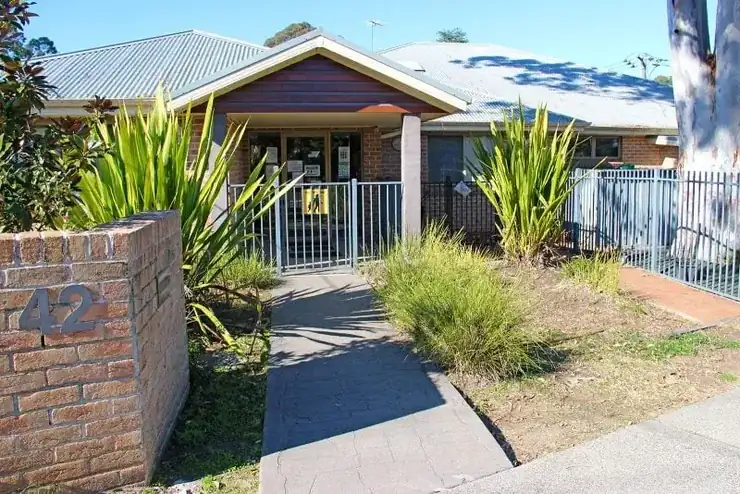
2026 has been an unusually busy year for childcare subsidy rules. If you stepped away from the detail for six months, three things changed underneath you: the activity test stopped limiting the first 72 hours in January, the Child Care Subsidy rates and thresholds were refreshed for 2026-27 in July, and NSW's Start Strong fee relief rolled over with new amounts. This guide covers each change and what it means for what you pay.
The activity test now only matters above 72 hours: the 3 Day Guarantee
From 5 January 2026, the activity test no longer decides whether you get subsidised care. Under the 3 Day Guarantee, every CCS-eligible family gets at least 72 hours of subsidised care per fortnight (three days a week of typical sessions), regardless of how much the parents work, study or volunteer.
Families with more than 48 hours of recognised activity a fortnight (each parent, if you have a partner), families with an approved exemption, and families with an Aboriginal and Torres Strait Islander child can get 100 hours per fortnight (Services Australia). So the activity test still applies above 72 hours, but it no longer locks anyone out of three subsidised days. We wrote a dedicated guide to how the 3 Day Guarantee works if you want the detail, including how hours translate into days at different session lengths.
CCS rates and thresholds for 2026-27
The subsidy percentage itself works the same way as before; the numbers moved with indexation in July. For 2026-27:
- Families earning up to $88,520 get the maximum 90% subsidy rate (Services Australia).
- Above that, the rate reduces by 1 percentage point for every $5,000 of family income.
- The rate reaches 0% at $538,520.
The hourly rate cap for centre-based day care is $15.19 in 2026-27 (Department of Education). Your percentage is applied to the lower of your centre's hourly session fee and that cap, which is why two families with the same percentage can have different gap fees at different centres. Our hourly rate cap guide walks through the mechanics, and the childcare subsidy calculator does the arithmetic for you with the 2026-27 numbers built in.
The higher rate for younger children
If you have more than one child aged 5 or under in care, the younger child or children can attract a higher subsidy rate, and this has its own income test rather than being a fixed bonus on top of your standard rate. For 2026-27, the higher rate is 95% for family incomes up to $146,437, then tapers: down to 80% at $191,437, flat at 80% until $270,727, tapering again to 50% at $360,727, flat at 50% until $370,727, and above that the younger child simply gets your standard rate.
Centrelink applies this automatically once both children are in care and your enrolments are confirmed, which is one more reason to make sure you have confirmed your enrolment in myGov.
Start Strong fee relief in 2026
Separate from CCS, the NSW Government's Start Strong program continues to reduce fees for preschool-aged children in long day care. For 2026 the standard amounts are $1,783 per year for children who turn 4 by 31 July 2026, and $423 per year for eligible 3 year olds (born 1 August 2022 to 31 July 2023); children in the equity groups named in the program guidelines attract higher amounts ($2,563 and $769). The relief is applied to your fees after the Child Care Subsidy, spread across the service's operating weeks for the year, and it can only be applied at one service at a time, so if your child attends two centres you nominate where it lands.
Start Strong stacks with CCS: the fee relief reduces the fee, and CCS applies on top. Families comparing preschool options can see how this plays out in our Sydney childcare costs guide.
What this means in practice
For most families the 2026 changes are good news in three directions at once: three days of subsidised care are guaranteed regardless of work hours, the income thresholds moved upward with indexation, and NSW fee relief continues for preschool-aged children. The interaction of the three is where it gets personal, and that is exactly what the calculator is for: pick a centre, put in your income and days, and it applies the 2026-27 rates, the cap, the second-child rate and the guarantee hours for you.
If you are new to the system entirely, start with our plain-English CCS guide or the step-by-step on claiming CCS through myGov. And if you would rather talk it through with a person, any of our directors can walk you through your situation on a tour.
Sources
- Recognised participation and activity test for Child Care Subsidy, Services Australia, January 2026.
- Your income can affect Child Care Subsidy, Services Australia, 2026-27 figures.
- A guide to Australian Government payments, 1 July to 19 September 2026, Services Australia, July 2026.
- Child Care Subsidy hourly rate caps are changing soon, Department of Education, 9 June 2026.
- 2026 Start Strong for Long Day Care program guidelines, NSW Department of Education, May 2026.
Reviewed 14 September 2026.